

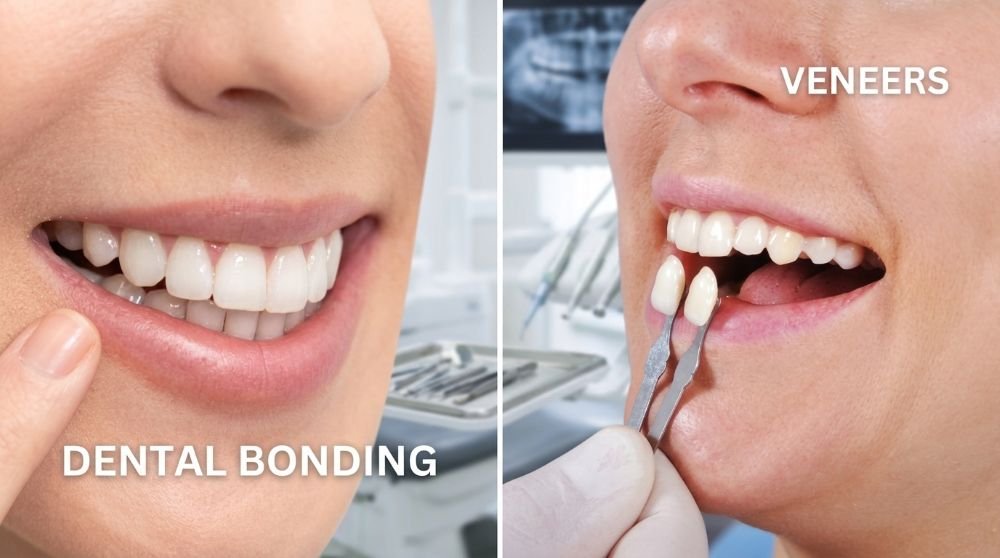
Dental Bonding vs Veneers: Which Is Right for Your Smile?
Table of Contents
A chipped front tooth has a way of becoming the only thing you see in photos. So does a small gap, a stubborn stain, or one tooth that looks a little shorter than its neighbours. When patients in our London, Ontario office ask how to fix these things, the conversation usually comes down to two options: dental bonding or veneers.
Both can change how your smile looks. They differ in cost, durability, how much of your natural tooth is involved, and how long they tend to last. Below, we compare dental bonding vs veneers side by side, explain how tooth bonding for chipped teeth works, break down bonding cost and veneer cost in Canada, and cover the questions worth settling before you choose.
Key Takeaways
- Bonding uses tooth-coloured resin to repair chips, gaps, and small flaws, usually in one visit with little or no change to your natural tooth.
- Porcelain veneers are thin custom shells that cover the front of the teeth. They usually require removing some enamel, which is generally not reversible.
- Bonding typically costs about $200 to $600 per tooth in Canada, while porcelain veneers typically cost about $900 to $2,500 per tooth.
- Veneers usually resist staining better and last longer, while bonding costs less up front and is easier to repair or redo.
- Healthy teeth and gums come first, so an exam is the best starting point for either option.
What Is Dental Bonding?
Dental bonding (also called composite bonding) uses a tooth-coloured resin to rebuild or reshape part of a tooth. The resin is matched to your natural shade, sculpted by hand, and hardened in place.
How Tooth Bonding for Chipped Teeth Works
For a small chip, the visit is usually straightforward:
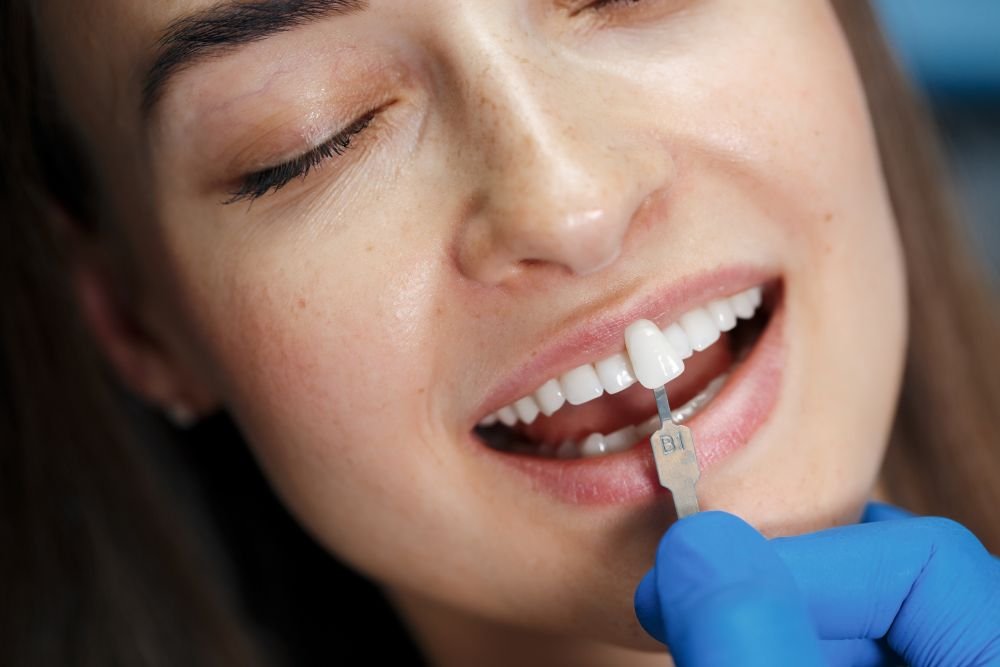
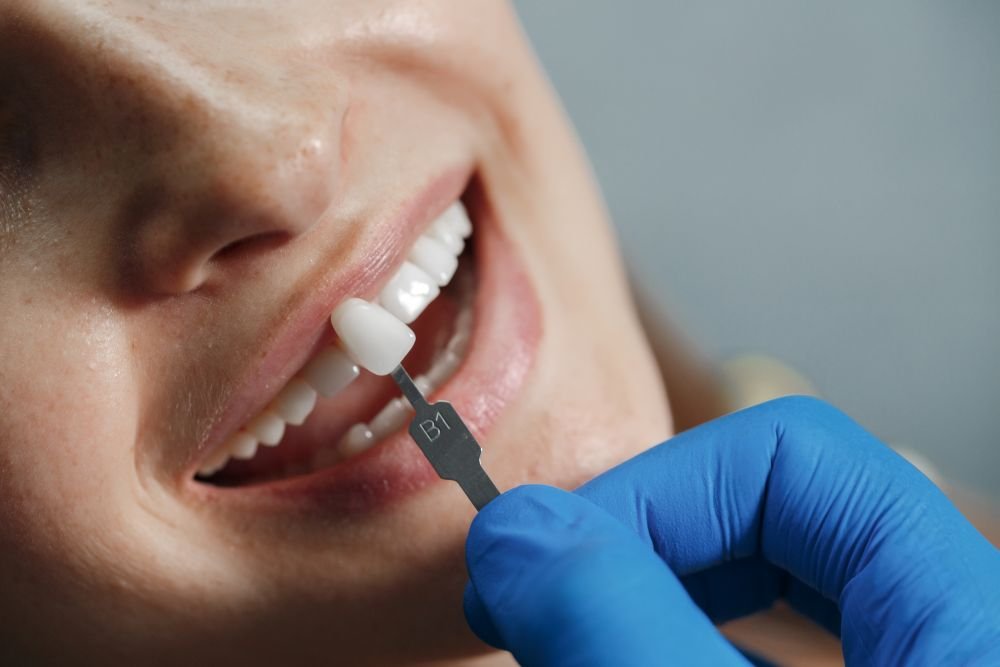
- Shade matching. Your dentist holds a shade guide up to your teeth to choose a resin colour that blends in.
- Preparing the surface. The tooth is lightly roughened and coated with a conditioning liquid so the resin can grip it. You may feel a little vibration, but this step is usually quick.
- Sculpting. The putty-like resin is applied in layers and shaped to rebuild the missing edge.
- Curing. A small blue light hardens each layer in seconds.
- Polishing. The tooth is trimmed, smoothed, and polished, and your bite is checked.
According to Cleveland Clinic’s overview of dental bonding, the procedure usually takes about 30 to 60 minutes per tooth. Because little or no enamel is removed, many patients do not need freezing for minor bonding. If the chip reaches closer to the nerve, or the tooth is sensitive, your dentist may recommend it.
What Bonding Can Fix
Bonding is often used for:
- Small chips and minor cracks
- Gaps between teeth
- Teeth that look short or uneven
- Some stains that whitening cannot lift
- Exposed root surfaces near the gumline, in some cases
Bonding works best for small to moderate changes. Large breaks, heavy biting surfaces, and teeth with extensive decay may need a different approach.
What Are Veneers?
Veneers are thin coverings bonded to the front surface of the teeth. They can change the colour, shape, size, and length of the teeth they cover, which is why they are often chosen for broader smile makeovers rather than single repairs.
Porcelain Veneers
Porcelain veneers are custom-made shells crafted in a dental lab. To make room for them, your dentist usually removes a thin layer of enamel from the front of each tooth. That step is generally permanent, so once you have porcelain veneers, those teeth will typically always need some kind of covering.
The process usually takes two visits. At the first, your teeth are prepared and an impression or digital scan is taken. Temporary veneers may be placed while the lab makes your final veneers, which usually takes a few weeks. At the second visit, the veneers are checked for fit and colour, then bonded in place.
Composite Veneers
Composite veneers use the same resin as bonding, applied across the whole front surface of a tooth. They are usually completed in one visit and often need less enamel removal than porcelain. They are less expensive than porcelain, but they tend to stain more easily and usually need repairs or replacement sooner.
Dental Bonding vs Veneers: Side by Side
Dental Bonding | Porcelain Veneers | |
Best for | Small chips, gaps, minor shape changes | Larger colour, shape, and size changes |
Enamel removal | Little or none | Usually a thin layer |
Reversible | Often | Generally no |
Visits | Usually one | Usually two, with lab time between |
Stain resistance | Moderate | High |
Typical lifespan | About 3 to 10 years | About 10 to 15 years |
Repairs | Usually simple to touch up | Usually need replacing if damaged |
Typical cost per tooth (Canada) | About $200 to $600 | About $900 to $2,500 |
Lifespan figures come from Cleveland Clinic’s patient guides to bonding and veneers. How long either lasts depends heavily on your habits, your bite, and how well the area is cared for.
Bonding Cost and Veneer Cost in Canada
Treatment | Typical Cost per Tooth (CAD) |
Dental bonding | About $200 to $600 |
Composite veneer | About $250 to $1,500 |
Porcelain veneer | About $900 to $2,500 |
These are typical Canadian price ranges in 2026. Your actual bonding cost or veneer cost depends on how many teeth are treated, the size and complexity of each repair, the materials used, and whether any other dental work is needed first. A single small chip usually sits at the lower end of the bonding range, while rebuilding the full front of a tooth sits higher.
Looking at Cost Over Time
Bonding costs less up front, but it may need touch-ups or replacement more often. Porcelain veneers cost more at the start, yet they often last longer before replacement. For a single chipped tooth, bonding is usually the more economical choice. For a full smile makeover, the long-term picture can look closer than the up-front prices suggest.
Insurance and Coverage
Coverage depends on why the treatment is done. When bonding repairs a chipped or broken tooth, part of the cost may be covered as a restorative service under some private plans and the Canadian Dental Care Plan, depending on your plan, eligibility, and any pre-approval requirements. Purely cosmetic treatment, including veneers, is usually not covered.
Our team can review your benefits, submit claims electronically when possible, and give you a cost breakdown before treatment begins. For patients without insurance, LendCare financing is available.
Which Is Right for Your Smile?
There is no single right answer. The best choice depends on what you want to change, the health of your teeth, your budget, and how you feel about removing enamel.
Bonding May Suit You If
- You have one or two small chips or gaps
- You want to keep as much natural tooth as possible
- You prefer a lower up-front cost
- You would like results in a single visit
- You are not ready to commit to a permanent change
Veneers May Suit You If
- You want to change the colour, shape, or size of several teeth
- You have deep staining that whitening and bonding cannot cover well
- You value stain resistance and long-term durability
- You are comfortable with a permanent change to your teeth
When Neither Is the First Step
Sometimes a different treatment makes more sense. Crowded or crooked teeth may be better addressed by moving them with Invisalign. A tooth with a large break or a root canal often needs a crown for strength, and same-day CEREC crowns may be available for suitable cases. Active decay and gum disease also need to be treated before any cosmetic work, since bonding and veneers rely on healthy teeth and gums underneath.
Questions to Settle Before Cosmetic Work
Do You Want Your Teeth Whiter First?
Bonding resin and porcelain do not respond to whitening gel the way natural enamel does. If you would like a brighter smile overall, it usually makes sense to whiten first, then match your bonding or veneers to your new shade. We offer dentist-supervised take-home whitening kits with custom trays, so you can reach your shade gradually before cosmetic work begins.
Do You Clench or Grind?
Grinding puts heavy force on the front teeth, and both bonding and veneers can chip or crack under that pressure. If you wake up with a sore jaw or notice worn edges, mention it at your consultation. Your dentist may recommend protecting your new work at night, and our guide on whether you need a night guard for teeth grinding explains the options.
Is the Timing Right?
Elective cosmetic work is often postponed during pregnancy, mainly as a precaution, while repairs that protect a tooth can usually go ahead. Our article on dental care during pregnancy explains what is generally safe and what can wait.
If other dental work is on the calendar, it helps to plan around it. For example, many patients schedule cosmetic treatment after recovering from wisdom teeth removal, once their mouth has healed and they are back to their usual foods. Our day-by-day guide on what to eat after wisdom teeth removal gives a realistic picture of that recovery timeline.
Is This for a Child or Teen?
Chipped front teeth are common in children and teens, often thanks to playgrounds, hockey, and the occasional collision with a sibling. Bonding is often used to repair them, since it preserves tooth structure while the mouth is still growing. Veneers are generally reserved for adults whose teeth and gums have finished developing. Regular checkups from an early age make it easier to catch and repair small chips before they grow, and our age guide for a child’s first dental visit explains when to start.
What to Expect at a Cosmetic Consultation
Patients often tell us they are unsure what to ask for, and that is completely fine. A consultation is a conversation, not a commitment.
In our London office, we start by asking what bothers you about your smile and what you would like to change. Then we check the health of your teeth and gums, since cosmetic work needs a healthy foundation. High-resolution intraoral photos let you see your teeth up close, often in more detail than a bathroom mirror ever has. Our iTero Lumina 5D scanner can also capture a 3D model of your teeth, which helps with planning and avoids the gooey impression trays many people dread.
From there, your dentist will explain which options fit your goals, what each involves, how long results usually last, and what the cost may be. If you feel anxious about dental visits, let us know. Nitrous oxide is available to help you feel more relaxed during treatment.
Caring for Bonding and Veneers
Good habits help either option last:
- Brush twice a day with a soft-bristled brush and a non-abrasive fluoride toothpaste.
- Clean between your teeth once a day.
- Avoid biting your nails, chewing pens, or opening packages with your teeth.
- Cut hard foods like apples and crusty bread into pieces, and chew with your back teeth.
- Limit coffee, tea, red wine, and tobacco, especially with bonding, since resin stains more easily than porcelain.
- Keep up with regular checkups and cleanings, so small chips or worn edges can be touched up early.
Remember that the natural tooth under bonding or a veneer can still develop decay at the edges, so daily cleaning matters just as much as before.
When a Chipped Tooth Needs Prompt Care
Not every chip is purely cosmetic. Contact your dental office promptly if a chip leaves a sharp edge that cuts your tongue or cheek, if the tooth is painful or sensitive, if you can see pink or red inside the broken area, or if a large piece has broken off. These can be signs that the break has reached deeper layers of the tooth. If a chip happened during a fall or sports injury, check the other teeth for looseness or damage too.
Seek emergency medical care right away, by calling 911 or going to the nearest emergency department, if a mouth injury comes with facial swelling that is spreading, trouble breathing or swallowing, a possible jaw fracture, or bleeding that will not stop.
Frequently Asked Questions
Is tooth bonding for chipped teeth a good option?
For small to moderate chips, bonding is often a practical choice. It is usually completed in one visit, preserves most of your natural tooth, and costs less than veneers. Larger breaks or chips on heavy biting surfaces may need a crown or another restoration instead.
How much does dental bonding cost in Canada?
Bonding cost typically ranges from about $200 to $600 per tooth in Canada, depending on the size and complexity of the repair. When bonding restores a chipped or broken tooth, some insurance plans may cover part of the cost.
How long does dental bonding last compared with veneers?
Bonding usually lasts about 3 to 10 years before it needs touch-ups or replacement, while veneers often last about 10 to 15 years with good care. Habits like grinding, nail biting, and chewing hard objects can shorten the life of either.
Does getting bonding or veneers hurt?
Most people find bonding comfortable, and many minor repairs need no freezing. Porcelain veneers usually involve local freezing while the teeth are prepared. Some people notice temporary sensitivity afterward, which usually settles.
Can bonding or veneers be whitened later?
No. Resin and porcelain do not whiten the way natural teeth do. If you would like whiter teeth, it is usually best to whiten first, then match your bonding or veneers to your new shade.
Find the Smile Fix That Fits
Bonding and veneers can both make a real difference in how you feel about your smile. Bonding is often a quick, conservative way to fix a chip or close a small gap, while veneers can offer a longer-lasting change across several teeth. The right choice depends on your goals, your teeth, and your budget.
At We Smile Dentistry, we offer both cosmetic bonding and veneers, and we take time to walk you through the trade-offs in plain language before anything is decided. Whether you have one chipped tooth or a list of things you would like to change, reach out to our London, Ontario team to book your appointment.
This content is for informational purposes only and is not a substitute for professional dental advice, diagnosis, or treatment. For personalized care, please book a consultation with Dr. Spagnuolo at We Smile Dentistry by calling us or visiting wesmiledentistry.ca/contact.