

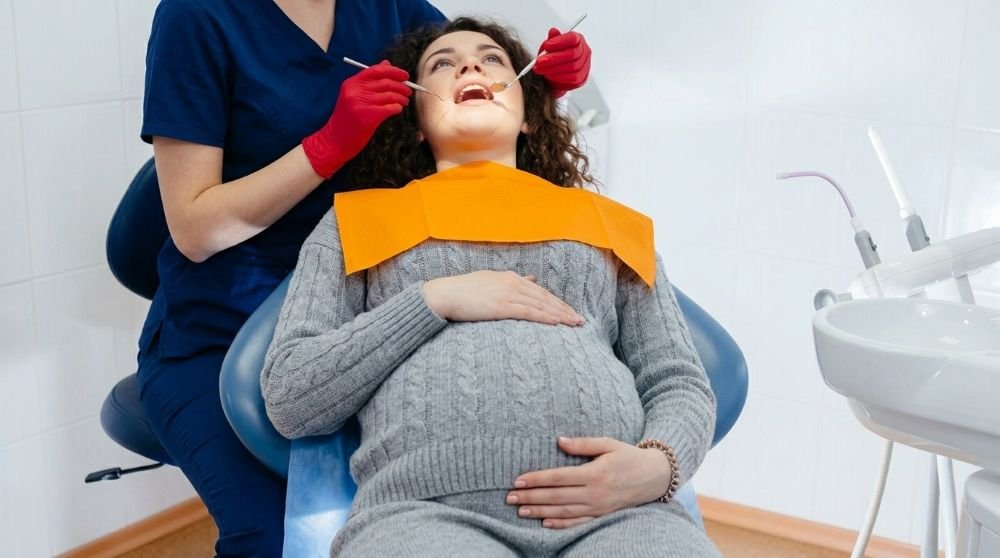
Dental Care During Pregnancy: What’s Safe and What to Postpone
Table of Contents
Pregnancy comes with a long list of new questions, and “is dental work safe while pregnant?” is one we hear often in our London, Ontario office. Some patients cancel their cleaning the moment they see a positive test, just to be careful. Others push through a toothache for weeks because they are worried about X-rays or freezing.
The reassuring news is that dental care is not something you need to put on hold for nine months. In fact, pregnancy is a time when your gums may need a little more attention than usual. Below, we explain which treatments are generally considered safe, what is usually worth postponing, how to recognize pregnancy gingivitis, and how to stay comfortable in the dental chair.
Key Takeaways
- Preventive, diagnostic, and restorative dental care is considered safe throughout pregnancy, according to current professional guidance.
- Dental X-rays and local anesthesia can be used when they are needed to diagnose or treat a problem.
- Pregnancy gingivitis is common. Hormonal changes can make gums puffy, tender, and quick to bleed.
- Elective and cosmetic treatments, such as teeth whitening, are often postponed until after your baby arrives.
- Delaying needed treatment can allow problems like infection to get worse, so tell your dentist about any pain or swelling right away.
Is Dental Work Safe While Pregnant?
For most people, yes. The American Dental Association notes that, along with the American College of Obstetricians and Gynecologists, it indicates that preventive, diagnostic, restorative, and emergency dental treatment may be performed during pregnancy. A national consensus statement on oral health care during pregnancy, revised in 2026, goes further: it advises that putting off needed treatment can create greater risks for both the pregnant person and the baby than the treatment itself.
Here is why that matters. A small cavity left alone for six months can turn into a large cavity, a painful infection, or a tooth that needs more involved care. Dental infections can also spread, and managing a severe infection is far harder than placing a filling.
That said, every pregnancy is different. Let your dental team know as soon as you are pregnant, how far along you are, and whether your pregnancy is considered high risk. If your prenatal care provider has given you any specific advice, share that with us as well.
What Dental Care Is Generally Safe During Pregnancy
Checkups and Cleanings
Routine exams and cleanings are both safe and recommended during pregnancy. If anything, they become more useful, since hormone changes can make your gums more reactive to plaque. Some patients benefit from an extra cleaning during pregnancy, and your dentist can let you know if that makes sense for you.
Dental X-Rays When Needed
Dental X-rays are considered safe during pregnancy when they are needed to diagnose a problem. Dental X-rays are aimed at the mouth, well away from the abdomen, and use a very small dose of radiation. In our office, we use low-dose digital radiography. If a routine X-ray is not urgent, we can talk about timing, but we will not skip an X-ray that is needed to find the source of pain or infection.
Fillings, Root Canals, and Other Restorative Care
Treating cavities and infected teeth during pregnancy is generally considered safe. Current guidance suggests avoiding amalgam (silver) fillings when possible during pregnancy, and tooth-coloured fillings are available in our office.
Local Anesthesia (Freezing)
Local anesthetics, including those with epinephrine such as lidocaine, are considered safe for dental treatment during pregnancy. Your dentist will choose the anesthetic and amount with your pregnancy in mind. Getting properly frozen also matters for your comfort, since pain and stress are not good for anyone.
Emergency Care
Pain, swelling, a broken tooth, or a dental infection should be treated promptly at any stage of pregnancy. Please do not wait it out.
What to Postpone Until After Your Baby Arrives
Some treatments can safely wait. They are not urgent, and there is little research on them during pregnancy, so many dentists recommend waiting.
Teeth Whitening and Other Cosmetic Treatments
Whitening is usually postponed until after pregnancy, mostly as a precaution, since there is little research on whitening products during pregnancy. The same goes for other purely cosmetic work. Your smile will still be there to brighten after delivery.
Elective Procedures That Are Not Causing Problems
If a treatment is planned but not urgent, such as replacing an old filling that is still working well, it can often wait until after your baby is born. Your dentist will help you sort out what can wait and what should not.
Nitrous Oxide (Laughing Gas)
Current guidance generally advises avoiding nitrous oxide during pregnancy, and any decision about sedation should involve your prenatal care provider. If you usually rely on nitrous oxide to feel relaxed at the dentist, tell us early. We can plan other comfort measures, such as extra time, frequent breaks, and a slower pace.
Wisdom Teeth Removal That Is Not Urgent
If your wisdom teeth have been flagged for removal but are not causing trouble, that surgery is often scheduled after pregnancy. Pregnancy gum changes can, however, make a partially erupted wisdom tooth more likely to flare up, with swollen, tender gums at the very back of the mouth. Our guide to the signs your wisdom teeth need to be removed explains what to watch for. If an infection develops, it should be treated rather than left until after delivery.
If a tooth does need to be removed while you are pregnant, careful aftercare helps healing go smoothly. Our article on how to avoid dry socket after an extraction covers the first-week basics.
Pregnancy Gingivitis: What It Is and What to Do
What Causes Pregnancy Gingivitis?
During pregnancy, hormone levels rise, and gum tissue becomes more sensitive to the plaque that naturally builds up on teeth. The result is pregnancy gingivitis, which means inflammation of the gums. The American Dental Association reports that it affects up to 75 percent of pregnant individuals.
It often shows up as:
- Gums that bleed when you brush or floss
- Red, puffy, or shiny gums
- Tender or sore gums
- Bad breath that does not go away
Bleeding gums can be alarming, but in pregnancy they are very common. Our guide on why gums bleed when you floss explains when bleeding is expected and when it deserves a closer look.
Why It Is Worth Taking Seriously
Pregnancy gingivitis often improves after delivery, but it does not always clear up on its own. Left untreated, gingivitis can progress to periodontitis, a more serious form of gum disease that affects the bone and tissue holding teeth in place. Over time, gum disease can also cause the gumline to pull back, which is why it helps to know the early signs of receding gums.
Research has also linked poor oral health during pregnancy with outcomes such as preterm birth and low birth weight. A link does not prove that one causes the other, and researchers are still studying the connection. It is one more reason to keep your gums healthy, not a reason to worry.
How Pregnancy Gingivitis Is Treated
For most people, the plan is simple:
- A professional cleaning to remove plaque and tartar
- Brushing twice a day with a soft-bristled brush and fluoride toothpaste
- Cleaning between your teeth once a day, gently
- More frequent checkups if your gums need extra support
If your exam shows that gum inflammation has moved below the gumline, your dentist may recommend a deeper cleaning. Our article on deep cleaning vs regular cleaning explains how the two differ and who usually needs each one.
Small Growths on the Gums
Some people notice a small, red, raw-looking lump on the gums during pregnancy, often between the teeth. These growths are sometimes called pregnancy tumours, although they are not cancer. They often shrink after delivery. Still, any new lump in your mouth should be checked by your dentist, especially if it bleeds easily or makes eating uncomfortable.
Morning Sickness and Your Teeth
Nausea and vomiting expose your teeth to stomach acid, which can soften and wear down enamel over time. A few simple habits can help:
- Rinse after vomiting. Rinse with water, or with about a teaspoon of baking soda mixed into a cup of water, to help neutralize the acid.
- Wait before brushing. Acid temporarily softens enamel, so many dentists suggest rinsing first and waiting a little while before you brush.
- Try a smaller toothbrush head. If brushing your back teeth triggers gagging, a smaller brush may help. Brushing slowly and focusing on your breathing can help too.
- Choose a mild toothpaste. If the taste of your usual toothpaste makes you queasy, try a milder fluoride toothpaste.
Cravings and Snacking
Frequent snacking, especially on sweets or sipping juice throughout the day, gives cavity-causing bacteria more fuel. When you can, choose snacks like cheese, yogurt, vegetables, and fruit, and drink water after sugary foods.
Making Dental Visits Comfortable During Pregnancy
Patients often tell us their biggest worry is not the treatment itself, but lying back in the chair for an hour while pregnant. These adjustments can help:
- Book a time that works for your body. If mornings bring nausea, an afternoon appointment may feel better.
- Sit up partway. Lying flat late in pregnancy can make some people dizzy. We can recline the chair only as far as is comfortable.
- Use a pillow. Tilting slightly to your left, or placing a small pillow under your right hip, can ease pressure and help prevent lightheadedness.
- Take breaks. Need to stretch, use the washroom, or sit up for a minute? Just let us know.
- Bring your information. Share your due date, any medications or prenatal vitamins you take, and your prenatal care provider’s contact details.
Many patients find the second trimester the most comfortable time for non-urgent treatment, after early nausea settles and before the later months make the chair less comfortable. Urgent treatment, however, should not wait for a particular trimester.
A Note on Medications
Do not start, stop, or change any medication on your own, including over-the-counter pain relievers. If you have dental pain, call your dentist, and check with your prenatal care provider before taking anything new. Your dental team will coordinate with your prenatal care provider when needed.
When to Call Your Dentist Right Away
Contact your dental office promptly if you notice:
- Tooth pain that keeps you up at night or does not go away
- Swelling in your gums, face, or jaw
- A bad taste or pus near a tooth
- A broken or cracked tooth
- A gum lump that bleeds easily or keeps growing
Seek emergency medical care right away, by calling 911 or going to the nearest emergency department, if you have facial swelling that is spreading, a fever with swelling, trouble breathing or swallowing, or bleeding that will not stop.
Frequently Asked Questions
Is dental work safe while pregnant?
For most people, yes. Current professional guidance considers preventive, diagnostic, and restorative dental care safe throughout pregnancy, including X-rays and local anesthesia when needed. Elective and cosmetic treatments are often postponed until after delivery.
What is pregnancy gingivitis?
Pregnancy gingivitis is gum inflammation caused by hormone changes that make the gums more sensitive to plaque. It can cause red, puffy, tender gums that bleed easily. It is common and usually responds well to professional cleanings and gentle, consistent home care.
Can I get dental X-rays while pregnant?
Dental X-rays are considered safe during pregnancy when they are needed to diagnose a problem. They use a very small dose of radiation and are aimed at the mouth. Non-urgent routine X-rays can sometimes be timed for after delivery, so talk with your dentist.
Is it safe to get a filling while pregnant?
Generally, yes. Treating a cavity during pregnancy is usually safer than letting it grow into an infection. Local anesthesia can be used, and current guidance suggests avoiding amalgam fillings when possible during pregnancy.
Can I whiten my teeth while pregnant?
Most dentists recommend waiting until after pregnancy. There is little research on whitening products during pregnancy, so postponing is the cautious choice. Whitening is cosmetic, so waiting does not put your oral health at risk.
Care for Your Smile While You Care for Your Baby
Pregnancy is a busy, exciting, and sometimes overwhelming time. Your dental care does not have to add to the stress. Keeping up with checkups, treating problems early, and giving your gums a little extra attention can help you feel comfortable now and set you up well for the years ahead.
At We Smile Dentistry, we see patients at every stage of life, including during pregnancy, and we adjust appointments around your comfort, your timeline, and any guidance from your prenatal care provider. Once your baby arrives, we are happy to see the newest member of your family too. If you are expecting and have questions about your teeth or gums, reach out to our London, Ontario team to book your appointment.
This content is for informational purposes only and is not a substitute for professional dental advice, diagnosis, or treatment. For personalized care, please book a consultation with Dr. Spagnuolo at We Smile Dentistry by calling us or visiting wesmiledentistry.ca/contact.