

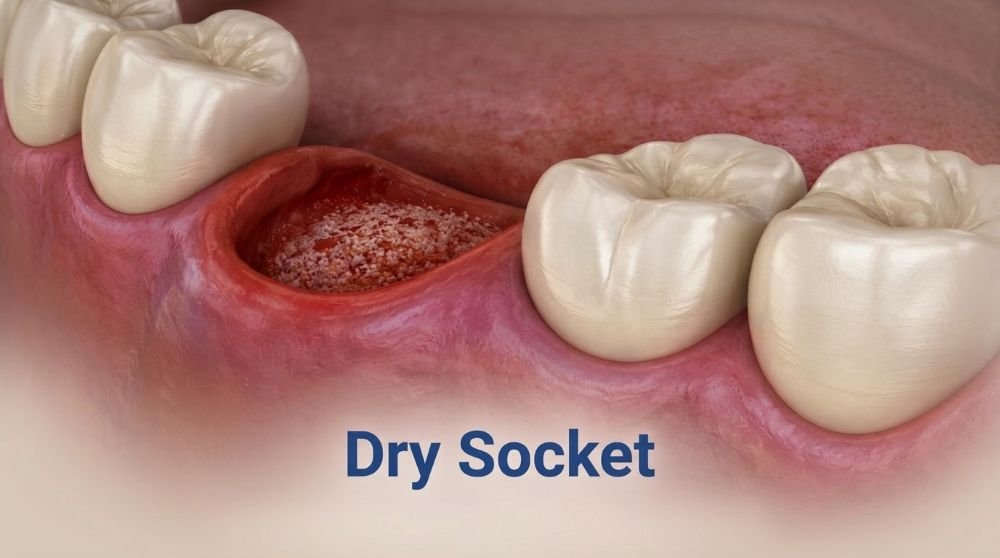
Dry Socket: Symptoms, Causes, and How to Avoid It After an Extraction
Table of Contents
The first day after a tooth extraction is usually the roughest. By day two or three, most people notice the ache settling down and start eyeing foods that require actual chewing. So when the pain suddenly ramps up instead of fading, it is fair to wonder what went wrong.
Often, the answer is dry socket. It is one of the more common complications after a tooth is removed, and while it can be intensely painful, it is also very treatable. Below, we walk through the dry socket symptoms to watch for, what dry socket feels like compared with normal healing, what causes it, and how to prevent dry socket in the first place.
Key Takeaways
- Dry socket happens when the blood clot in an extraction site breaks down or comes loose too early, leaving bone and nerve endings exposed.
- The classic warning sign is pain that gets worse, not better, a few days after the extraction, often spreading toward the ear, temple, or neck.
- Smoking, difficult lower wisdom tooth removal, a previous dry socket, and estrogen-containing birth control are linked to a higher risk.
- Skipping straws, tobacco, and vigorous rinsing while the socket heals can lower your chances.
- Dry socket is treatable, and many patients feel relief soon after a dentist cleans the socket and places a soothing dressing.
What Is Dry Socket?
After a tooth is removed, a blood clot forms in the empty socket. Think of it as a natural bandage: it covers the bone and nerve endings underneath and gives new tissue a framework to grow on.
Dry socket, known clinically as alveolar osteitis (inflammation of the bone that lined the tooth’s socket), happens when that clot dissolves too soon, gets knocked loose, or never forms properly. With the bone exposed to air, food, and saliva, the area becomes very sensitive and healing slows down.
It is not rare. Dry Socket affects roughly 2 to 5 percent of tooth extractions and is more common after wisdom tooth removal. Lower wisdom teeth, which are often more involved to remove, account for a large share of cases.
Dry Socket Symptoms to Watch For
Some soreness, mild swelling, and a little oozing are expected after any extraction. Dry socket symptoms tend to stand out because of their timing and intensity.
Pain That Gets Worse After a Few Days
Normal post-extraction discomfort usually peaks within the first day or two, then gradually improves. Dry socket pain typically appears between one and five days after the extraction, most often within the first three. If you have not noticed symptoms by about day five, dry socket becomes much less likely.
Pain That Travels
Dry socket pain often radiates beyond the extraction site, toward the ear, temple, or neck on the same side. Patients sometimes come in convinced they have an earache or a new toothache in a perfectly healthy neighbouring tooth.
An Empty-Looking Socket
A healthy socket usually holds a dark, scab-like clot in the early days. With dry socket, the socket may look empty, and you may see a whitish surface at the bottom, which is exposed bone.
Bad Breath or a Foul Taste
A persistent unpleasant taste, or bad breath that brushing does not fix, is common. Food debris collecting in the unprotected socket is often part of the reason.
Pain That Over-the-Counter Relief Barely Touches
Pain that keeps you up at night, or does not ease with the pain relief your dentist recommended, is worth a call whatever the cause.
Dry socket does not usually cause significant swelling or fever on its own. If you notice either, contact your dentist promptly, since they can point to an infection instead.
What Does Dry Socket Feel Like?
Patients often describe it as a deep, throbbing ache that seems to come from the jawbone itself, rather than the sore, bruised feeling of normal healing. It may pulse with your heartbeat and flare when cold air or liquid reaches the socket.
Here is how the two usually compare:
Normal Healing | Possible Dry Socket | |
Pain pattern | Worst in the first day or two, then gradually eases | Eases at first, then sharply worsens a few days later |
Where it hurts | Mostly around the extraction site | Spreads toward the ear, temple, or neck |
How the socket looks | Dark clot, then pinkish new tissue | Empty-looking, sometimes with whitish bone visible |
Breath and taste | Mild changes are possible | Persistent bad breath or a foul taste |
Response to pain relief | Usually manageable | Often only partly relieved |
One caution before you diagnose yourself in the bathroom mirror: a healing socket can develop a creamy white or yellowish layer of new tissue, which is normal and easy to mistake for bone. If you are unsure, a quick look from a dentist is more reliable than a flashlight and a guess.
What Causes Dry Socket?
Researchers still do not fully understand why the clot breaks down in some people and not others. One leading explanation is that the body dissolves the clot too quickly, a process called fibrinolysis (the natural breakdown of blood clots). Several factors appear to raise the risk.
Smoking and Tobacco Use
Smoking is one of the most consistently studied risk factors. A 2022 systematic review published in Dentistry Journal found that smokers had more than three times the odds of developing dry socket, with about 13 percent of smokers affected compared with roughly 4 percent of non-smokers. One study included in that review also found that smoking on the day of surgery carried a higher risk than waiting until the second day.
Difficult Extractions
Teeth that need a more surgical approach, particularly impacted lower wisdom teeth, are linked to higher rates of dry socket. More handling of the bone and gum tissue generally means a more demanding healing process.
Infection Around the Tooth
A current or previous infection near the tooth being removed may increase the risk. This includes teeth removed because of a deep infection or because advanced gum disease has loosened them.
Estrogen-Containing Birth Control
Estrogen can affect how blood clots form and break down, and studies have linked oral contraceptives to a higher rate of dry socket. If you take hormonal birth control, mention it before your extraction so your dentist can factor it into planning. Do not stop or change any medication on your own.
Disturbing the Clot
Sucking through a straw, spitting forcefully, rinsing hard, or poking the site with your tongue or fingers can all dislodge a fresh clot.
A Previous Dry Socket or Poor Oral Hygiene
If you have had dry socket before, you are more likely to have it again. Bacteria around the site from poor oral hygiene may also play a role.
How to Prevent Dry Socket
You cannot always prevent dry socket, but you can lower your risk with a little planning and some patience during the first week.
Before Your Extraction
Patients often ask us whether there is anything to do ahead of time. A few steps help:
- Share your full health history, including smoking or vaping, birth control, medications, and any previous dry socket.
- If you smoke, ask your dentist about pausing before and after the procedure, since the first days of healing are the most vulnerable.
- Ask whether a preventive rinse makes sense for you. A Cochrane systematic review found moderate-certainty evidence that chlorhexidine (an antibacterial ingredient), used as a rinse around the time of extraction or as a gel placed in the socket, probably reduces the risk of dry socket. Whether it suits you is a decision for your dentist.
For the First Week After
Your dentist’s written instructions come first, since they are tailored to your procedure. Common advice includes:
- Skip straws for at least a week.
- Avoid smoking and vaping for as long as your dentist advises.
- Do not spit forcefully. When a rinse is recommended, tilt your head and let the liquid drain out gently rather than swishing.
- Stick with soft foods such as yogurt, eggs, mashed potatoes, and soup that has cooled, and chew on the other side.
- Skip hot and fizzy drinks in the first few days.
- Avoid hard, crunchy, chewy, or seedy foods that can lodge in the socket.
- Keep fingers and tongue away from the site, however tempting.
- Take it easy for the first day or two, since strenuous activity can increase bleeding.
Keep Up Gentle Oral Hygiene
Continue brushing your other teeth gently, and follow your dentist’s guidance on when to clean near the extraction site. Once you have healed, stick with a soft-bristled brush and light pressure; scrubbing hard can contribute to receding gums over time.

How Dry Socket Is Treated
If you think you have dry socket, call your dentist rather than waiting it out. Treatment is usually quick and focused on relief.
Examination and Imaging
Your dentist looks at the socket and asks about your pain. An X-ray may be taken to rule out other causes, such as a small root fragment left behind. In our London, Ontario office, we use low-dose digital radiography for this.
Gentle Cleaning
The socket is rinsed with salt water or an antibacterial solution to flush out trapped food and debris.
A Soothing Dressing
A medicated dressing, often containing eugenol (a clove-derived ingredient with soothing properties), may be placed in the socket. Many patients notice relief soon after. The dressing may need to be changed over the following days, depending on how the area responds.
Pain Relief and Follow-Up
Your dentist may recommend over-the-counter pain relief. Because dry socket is usually an inflammatory problem rather than an infection, antibiotics are generally reserved for cases where infection is suspected. With proper care, dry socket usually heals within about 7 to 10 days as new tissue covers the exposed bone.
If you feel anxious about having a tender area examined, let the team know. Nitrous oxide (laughing gas) is available for nervous patients.
When to Call a Dentist or Seek Emergency Care
Call a dentist if:
- Your pain gets worse after day two or three instead of better
- Pain keeps you up at night or does not ease with the relief your dentist recommended
- The socket looks empty or you can see bone
- You notice persistent bad breath or a foul taste
If you cannot reach the office that removed your tooth, or you would like a second opinion, our team offers emergency dental care when scheduling allows.
Dry socket is painful but rarely dangerous. It is not in the same category as a knocked-out adult tooth, where every minute counts. Seek emergency medical care right away, however, for facial swelling that is spreading, fever with swelling, trouble breathing or swallowing, or bleeding that will not stop with steady pressure.
Looking Ahead: Replacing the Missing Tooth
If the tooth that was removed was not a wisdom tooth, you may already be thinking about what fills the gap. Options include a bridge, a partial denture, or a dental implant, and the right timing depends on how the site heals. Our guide comparing dentures and dental implants walks through the costs and trade-offs. When an implant is on the table, 3D CBCT imaging in our office helps assess the healed bone before any planning begins.

Frequently Asked Questions
How do I know if it is dry socket or normal healing pain?
Normal healing pain is usually worst in the first day or two and then steadily improves. Dry socket pain typically gets worse a few days after the extraction, may spread toward the ear or neck, and often comes with an empty-looking socket or a bad taste. A dental exam is the most reliable way to tell the difference.
What does dry socket feel like?
Most people describe a deep, throbbing ache in the jaw that radiates toward the ear, temple, or neck on the same side. It often feels stronger than expected post-extraction soreness and responds poorly to over-the-counter pain relief.
How long does dry socket last?
Treatment often brings noticeable relief, and the area usually heals within about 7 to 10 days. Without treatment, the socket still heals in time, but the pain typically lasts longer.
How can I prevent dry socket after a wisdom tooth extraction?
Avoid straws, smoking, vaping, forceful spitting, and vigorous rinsing during the first week, stick to soft foods, and follow your dentist’s instructions closely. If you smoke or take estrogen-containing birth control, mention it before your procedure so your dentist can plan accordingly.
Can dry socket heal on its own?
Most dry sockets do eventually heal without treatment, but the pain can be intense along the way. Seeing a dentist can relieve pain sooner and rule out other problems, such as infection.
Don’t Wait Out Worsening Pain
Dry socket can make a routine extraction feel anything but routine. The good news is that it is well understood and usually responds to straightforward care. If your pain is getting worse instead of better, there is no prize for toughing it out.
At We Smile Dentistry, we see patients of every age for urgent concerns, including painful sockets after an extraction, and we offer same-day emergency appointments when available. If something does not feel right after a tooth removal, reach out to our London, Ontario team. We will take a look, explain what is going on, and walk you through the next steps.
This content is for informational purposes only and is not a substitute for professional dental advice, diagnosis, or treatment. For personalized care, please book a consultation with Dr. Spagnuolo at We Smile Dentistry by calling 519-661-0042 or visiting wesmiledentistry.ca/contact.