


What Causes Receding Gums? Early Warning Signs and Treatment Options
Table of Contents
Maybe a tooth looks a little longer than it used to, or a sip of iced coffee sends a sharp zing through one spot. Receding gums tend to creep up slowly, which is why many people only notice them once a dentist points them out.
They are also very common. A review in the Journal of the American Dental Association reported that about half of adults aged 18 to 64, and 88 percent of adults 65 and older, have at least one area of gum recession. Below, we cover the most common receding gums causes, the early signs, how to stop receding gums from getting worse, and whether receded gums can grow back.
Key Takeaways
- Receding gums have several possible causes, including gum disease, brushing too hard, naturally thin gum tissue, tooth position, and tobacco use.
- Early signs include teeth that look longer, sensitivity near the gumline, and a darker band of root showing above the tooth.
- Receded gums do not grow back on their own, but progression can often be slowed or stopped.
- Treatment ranges from desensitizing care and bonding to gum grafting in suitable cases.
What Are Receding Gums?
Gum recession happens when the edge of the gum pulls back from a tooth, exposing part of the root. That matters because the root is not protected by enamel. According to Cleveland Clinic’s overview of gum recession, roots are covered by a softer layer called cementum, which is why exposed roots often feel sensitive and are more prone to decay.
Recession can affect a single tooth or many, and it is most often seen on the cheek-facing side of the teeth.
Receding Gums Causes
Recession is usually multifactorial, meaning more than one cause is often at work. The JADA review also found recession in people with both good and poor oral hygiene, so it is not always a sign that someone has been neglecting their teeth.
Gum Disease
Plaque and tartar buildup can inflame the gums. If that inflammation progresses to periodontitis, it breaks down the bone and tissue that support the teeth, and the gumline often follows the bone down.
Brushing Too Hard
Scrubbing with firm pressure or a hard-bristled brush can gradually wear the gum tissue back. Enthusiastic brushers are often surprised to learn that their dedication is part of the problem.
Naturally Thin Gum Tissue
Some people are simply born with thinner, more delicate gum tissue, which makes recession more likely even with excellent home care.
Tooth Position and Orthodontic History
Teeth that are crowded, tipped, or sitting toward the cheek may have a thinner layer of bone and gum covering them. A history of braces or other orthodontic treatment is also linked with a higher chance of recession.
Tobacco Use
Smoking and chewing tobacco are both associated with gum recession, and chewing tobacco can irritate the gum directly where it is held.
Piercings and Injury
Lip and tongue jewellery can rub against the gums over time. Trauma to the gum tissue, from an injury or even a habit like picking at the gums, can also contribute.
Clenching and Grinding
Some dentists link heavy clenching and grinding to wear and small notches near the gumline, although research on whether grinding directly causes recession is mixed. A bite evaluation can help sort out whether it is playing a role for you.
Early Warning Signs of Receding Gums
Because recession happens gradually, the early signs are easy to overlook. Watch for:
- Teeth that look longer than they used to
- A yellowish or darker band showing just above the tooth, where the root is exposed
- Sensitivity to hot, cold, or sweet foods and drinks
- Sensitivity while brushing, flossing, or during dental cleanings
- A small notch you can feel with your fingernail near the gumline
- Discomfort along the gumline
Left unchecked, recession can eventually contribute to bone loss and loose teeth, so it is worth having any of these signs looked at early.
How Your Dentist Checks for Gum Recession
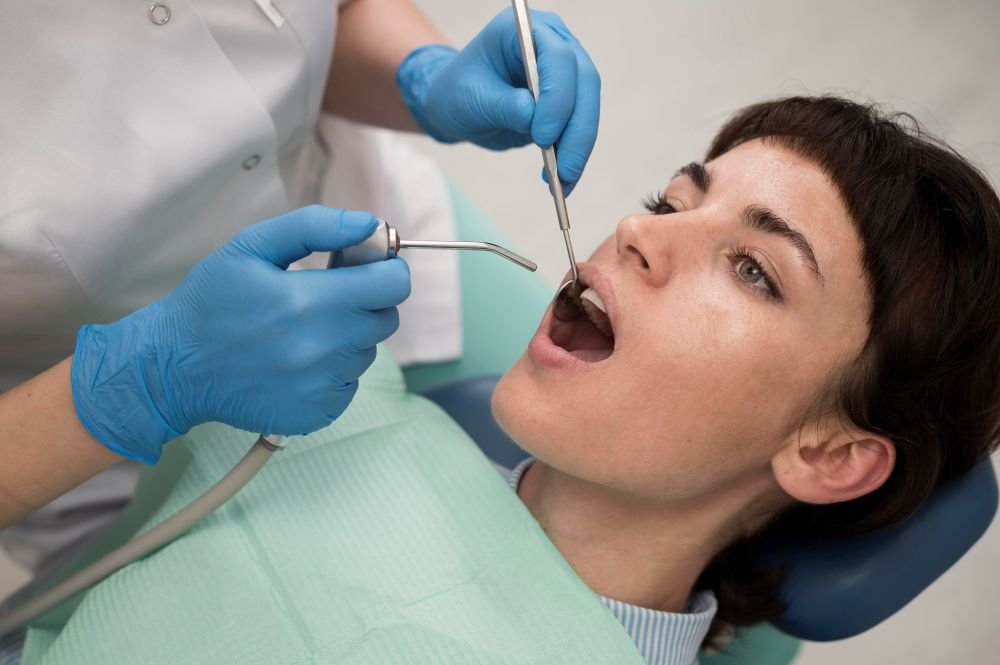
Gum recession is usually picked up during a routine exam. Your dentist or hygienist uses a thin measuring instrument called a periodontal probe to measure how much root is showing and how deep the pockets around each tooth are. Healthy pockets generally measure about 1 to 3 millimetres.
Because bone loss is common in areas of recession, low-dose digital X-rays help show what is happening beneath the gums. In our London office, OVERJET AI software also helps highlight bone level changes on X-rays, alongside the dentist’s own review.
Tracking change over time is just as important as a single measurement. We can save 3D scans from our iTero Lumina 5D scanner and high-resolution intraoral photos, then compare them at later visits to see whether your gumline is holding steady or moving.
Can Receded Gums Grow Back?
Unfortunately, no. Once gum tissue has receded, it does not grow back on its own. So be cautious with any rinse, oil, or supplement that promises to bring your gums back.
That said, there is real good news. Recession can often be stopped from getting worse, sensitivity can usually be managed, and in suitable cases a gum graft can cover exposed roots again.
How to Stop Receding Gums
The most effective approach is to identify what is driving the recession and address it.
Brush Gently, but Thoroughly
Use a soft-bristled toothbrush and light pressure, angling the bristles toward the gumline and using small, gentle motions rather than hard sideways scrubbing. Brush twice a day and clean between your teeth once a day.
Treat Gum Disease Early
If gum disease is involved, a professional cleaning and, when needed, a deeper cleaning below the gumline called scaling and root planing can help bring inflammation under control.
Remove Other Triggers
Stopping tobacco use and removing lip or tongue jewellery can take pressure off vulnerable gum tissue.
Keep Up with Regular Checkups and Cleanings
Regular checkups and cleanings let your dental team catch small changes before they become bigger problems. Depending on your gum health, visits may be recommended more often than twice a year.
Treatment Options for Receding Gums
The right treatment depends on the cause, how far the gums have receded, and how much the recession bothers you.
Desensitizing Care
Desensitizing toothpastes with ingredients such as potassium nitrate, stannous fluoride, or arginine can calm root sensitivity, although they usually take several weeks of daily use to work. Fluoride varnish applied during a dental visit can also help reduce discomfort.
Tooth-Coloured Bonding
In some cases, tooth-coloured bonding can cover an exposed root surface, making it less sensitive and less noticeable. It does not replace gum tissue, but it can be a practical, conservative option.
Orthodontic Treatment
When a crooked or tipped tooth is contributing to recession, moving it into better alignment with clear aligners or braces may help, and in some cases the gumline can improve over time.
Gum Grafting
For moderate to severe recession, a gum graft is generally considered the most predictable, long-lasting option. Tissue is usually taken from the roof of the mouth, or donor tissue is used, and stitched over the exposed root. Grafting is typically performed by a periodontist, a dental specialist with at least three years of additional university training, according to the Canadian Dental Association. Most people feel back to normal in about two weeks, and your dentist can coordinate the referral.
When to See a Dentist
Book an exam if you notice new sensitivity, teeth that look longer, a change in the gumline around one tooth, or gums that bleed when you brush. Contact our team sooner if a tooth feels loose or you have gum pain or swelling.
Frequently Asked Questions
What are the most common receding gums causes?
Common causes include gum disease, brushing too hard, naturally thin gum tissue, tooth position, and tobacco use. Recession is often multifactorial, so more than one of these may be involved.
Can receded gums grow back?
No, receded gums do not grow back on their own. However, progression can often be stopped, and in suitable cases gum grafting can cover exposed roots.
Do receding gums mean I have gum disease?
Not always. Gum disease is one possible cause, but recession also appears in people with healthy gums and good oral hygiene, often because of brushing habits, thin gum tissue, or tooth position.
Is gum recession just a normal part of aging?
Recession becomes more common with age, but it is not something to simply accept. Exposed roots can become sensitive and are more prone to decay, so it is worth having recession checked and monitored.
Protect Your Gumline Before It Moves Further
Receding gums rarely hurt at first, but they are much easier to manage when they are caught early. A gentler brushing routine, treatment for any gum disease, and regular monitoring can go a long way toward keeping your gumline where it is.
At We Smile Dentistry, we measure, photograph, and track gum changes for patients of every age, so you can see for yourself whether things are stable. If your teeth have started to feel sensitive or look a little longer, book your appointment and our London, Ontario team will help you understand what is causing it and what comes next.
This content is for informational purposes only and is not a substitute for professional dental advice, diagnosis, or treatment. For personalized care, please book a consultation with Dr. Spagnuolo at We Smile Dentistry by calling 519-661-0042 or visiting wesmiledentistry.ca/contact.