


The 4 Stages of Gum Disease: From Gingivitis to Periodontitis
Table of Contents
A little pink in the sink after flossing is easy to ignore. Yet bleeding gums are often the first sign of gum disease, which tends to develop slowly and quietly, usually without pain.
Gum disease moves through stages, and the earliest one can usually be reversed. Below, we walk through the four stages, explain the difference between gingivitis and periodontitis, and answer the question patients in our London, Ontario office ask most often: can gum disease be reversed?
Key Takeaways
- Gum disease usually progresses in four stages: gingivitis, early periodontitis, moderate periodontitis, and advanced periodontitis.
- Gingivitis affects only the gums and can usually be reversed. Periodontitis damages bone, which usually cannot be fully restored, but the disease can often be controlled.
- Early gum disease often causes no pain, so routine exams are one of the most reliable ways to catch it.
What Is Gum Disease?
Gum disease, also called periodontal disease, is inflammation and infection of the tissues that support your teeth: the gums, the ligaments that anchor each tooth, and the jawbone underneath.
It starts with plaque, the sticky film of bacteria that forms on teeth every day. If plaque is not cleaned away, it hardens into tartar. The Canadian Dental Association notes that tartar cannot be removed by brushing and flossing and can lead to infection where the gums attach to the teeth. Research also links gum disease with conditions such as diabetes and heart disease, though a link does not prove cause.
The 4 Stages of Gum Disease
Patient resources such as Cleveland Clinic’s guide to periodontal disease describe gum disease in four stages.
Stage 1: Gingivitis
Gingivitis is inflammation limited to the gums, with no bone loss. Healthy gums fit snugly around each tooth, leaving a shallow space of roughly 1 to 3 millimetres. With gingivitis, gums may look red and puffy and bleed when you brush or floss, but they stay attached to the tooth. Many people notice nothing, and smoking can reduce bleeding, hiding this early sign.
Stage 2: Early Periodontitis
Bacteria move below the gumline, and the gums begin to separate from the teeth, forming periodontal pockets, often around 4 millimetres deep. Plaque collects where brushing and flossing cannot reach, and the bone starts to break down. Many people still feel no pain.
Stage 3: Moderate Periodontitis
More ligament, soft tissue, and bone break down, and pockets often deepen to around 5 millimetres. You may notice receding gums that make teeth look longer, sensitivity to hot or cold, persistent bad breath, pus along the gumline, or tenderness when chewing.
Stage 4: Advanced Periodontitis
Bone loss is significant and pockets are often 6 millimetres or deeper. Teeth may loosen or shift, your bite can change, and painful gum infections (abscesses) become more likely. The Canadian Dental Association identifies gum disease as one of the main reasons adults lose their teeth.
These measurements are a general guide, not a diagnosis. Your dentist also considers bone levels on X-rays, gum recession, and how firmly each tooth is held in place.
How Dentists Stage Gum Disease Today
Dentists also use a more detailed framework, published in the Journal of Periodontology in 2018, that sorts periodontitis into Stages I to IV by severity and adds a grade (A, B, or C) for how fast it appears to be progressing. Smoking and diabetes can raise the grade. Two people with “moderate” gum disease may be losing ground at very different speeds, which is why your care plan is built around your mouth, not a chart.
Gingivitis vs Periodontitis: What’s the Difference?
The main difference comes down to one question: has the damage reached the bone and connective tissue that hold your teeth in place?
Feature | Gingivitis | Periodontitis |
What is affected | Gums only | Gums, ligaments, and jawbone |
Bone loss | None | Yes, from mild to severe |
Common signs | Red, puffy gums that bleed when brushing or flossing | Bleeding, receding gums, bad breath, sensitivity, loose or shifting teeth |
Pain | Usually none | Often none early on; tenderness or pain is possible later |
Reversible? | Usually, with a professional cleaning and good home care | Lost bone usually cannot be fully restored, but the disease can often be controlled |
Not every case of gingivitis progresses. Genetics, smoking, diabetes, and stress all affect whether it does, and how quickly.
Can Gum Disease Be Reversed?
It depends on the stage.
Gingivitis: Usually, Yes
Because gingivitis has not damaged the bone, it can usually be reversed. The Canadian Dental Association notes that gum disease can be turned around in its early stages with a professional cleaning to remove tartar, plus brushing twice a day and flossing once a day. Many patients notice less bleeding within a couple of weeks of consistent home care, though every mouth responds differently.
Periodontitis: Controlled, Not Cured
Once bone and gum attachment are lost, the damage usually cannot be fully undone. Cleveland Clinic describes periodontal disease as manageable rather than curable, with treatment able to reduce infection and rebuild some bone and tissue. Think of it less like a cold that clears up and more like blood pressure: something you keep in check with steady care. The sooner treatment starts, the better your chances of keeping your natural teeth.
How Gum Disease Is Checked at a Dental Visit
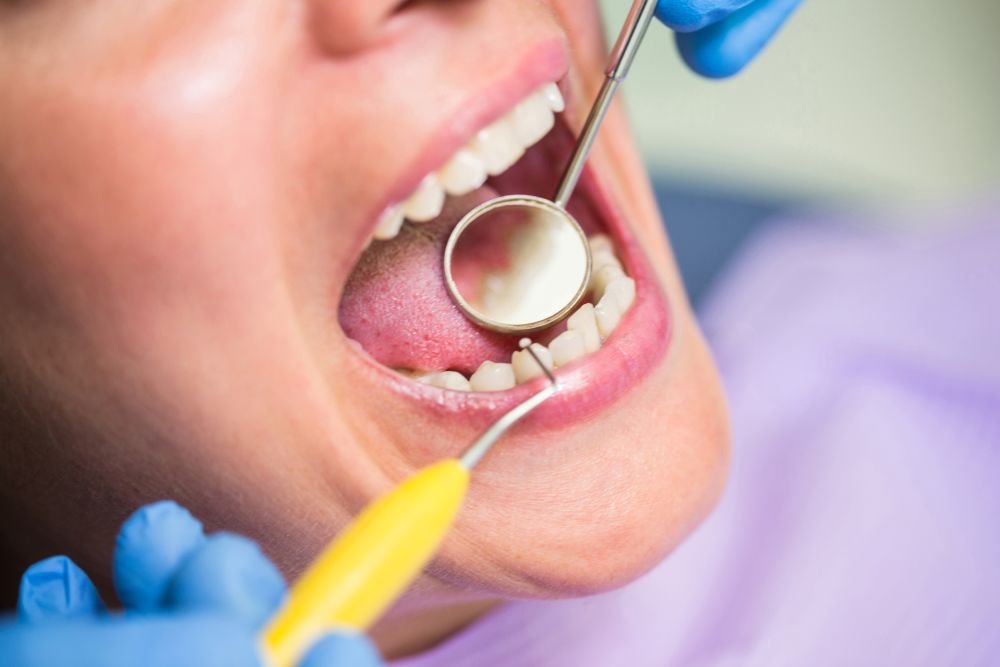
Because early gum disease often causes no pain, it is usually found during a routine exam.
Measuring Your Gums
Your dentist or hygienist gently slides a thin, ruler-like periodontal probe along the gumline of each tooth, calling out numbers such as “three, two, three.” Those are pocket depths in millimetres, and this is one test where a low score is the goal. Most people feel light pressure, and inflamed spots can feel tender. If you feel anxious, tell us; nitrous oxide (laughing gas) is available.
Digital X-Rays and AI-Assisted Review
Low-dose digital X-rays show the bone around your teeth. In our London office, OVERJET AI software also helps highlight bone level changes and tartar on X-rays, alongside the dentist’s own review. Intraoral camera photos let you see your gums up close, too.
Treatment Options by Stage
Treatment depends on the stage, your health history, and how your gums respond. For gingivitis, a professional cleaning paired with home care coaching is usually the starting point.
Early to Moderate Periodontitis
Treatment often starts with scaling and root planing, a deeper cleaning that removes tartar from root surfaces below the gumline and smooths them so bacteria struggle to settle back in. It is usually done with local freezing, followed by maintenance cleanings that are often more frequent than every six months.
Advanced Periodontitis
Advanced cases may need surgery, such as pocket reduction or grafting to help regenerate lost bone or gum tissue. These procedures are often performed by a periodontist, a specialist with at least three years of additional university training in gum disease. Your dentist can coordinate a referral.
When Teeth Have Been Lost
Once the gums are healthy and stable, you can replace missing teeth with a bridge, a denture, or a dental implant. In our office, 3D CBCT imaging helps confirm there is enough healthy bone before implant planning.
How to Protect Your Gums at Home
Most gum disease can be prevented, and daily habits do most of the work.
- Brush at least twice a day with a soft-bristled toothbrush and fluoride toothpaste, angling the bristles toward the gumline.
- Clean between your teeth at least once a day with floss, interdental brushes, or a water flosser.
- Keep flossing if your gums bleed; they usually need more attention, not less. If bleeding continues after a week or two, book an exam.
- Avoid tobacco, a major risk factor for gum disease.
- If you have diabetes, work with your doctor to keep it well managed.
- Keep up with regular checkups and cleanings, which may be more frequent depending on your gum health.
Gum health is a family matter, too. Puberty, pregnancy, and braces can all make gums more prone to inflammation, so gum checks are part of routine care for children and teens.
When to See a Dentist About Your Gums
Book an exam if you notice any of these signs of gum disease, which the Canadian Dental Association flags as reasons to see your dentist:
- Changes in gum colour, or redness around your teeth
- Gums that bleed every time you brush or floss
- Bad breath that will not go away, or a metallic taste
- Shiny, puffy, or sore gums
- Teeth that feel sensitive for no clear reason
Reach out to our team promptly if you have gum swelling, a pimple-like bump on the gums, pus, pain when biting, or a loose tooth. For spreading facial swelling, fever with dental swelling, or trouble breathing or swallowing, seek emergency medical care right away.

Frequently Asked Questions
What is the difference between gingivitis and periodontitis?
Gingivitis is inflammation of the gums only, with no bone loss, and it can usually be reversed. Periodontitis has damaged the ligaments and bone that support the teeth. It can often be controlled, but lost bone usually cannot be fully restored.
Can gum disease be reversed?
Gingivitis usually can, with a professional cleaning and consistent brushing and flossing. Once periodontitis has caused bone loss, the damage usually cannot be fully undone, but treatment can stop it from progressing and help you keep your teeth.
How long does it take for gingivitis to become periodontitis?
There is no set timeline. Some people have gingivitis for years without it progressing, while smoking, diabetes, genetics, or stress can speed things up for others.
Do children and teens get gum disease?
Yes. Gingivitis can affect children and teens, especially during puberty or while wearing braces. Regular checkups and steady brushing and flossing habits help keep young gums healthy.
Healthy Gums Start with a Simple Check
Gum disease rarely makes a dramatic entrance, which is why regular exams matter. Caught early, gingivitis can usually be reversed; caught later, periodontitis can still be managed.
At We Smile Dentistry, checking your gums is part of every routine exam, for patients of every age. Whether it has been six months or six years since your last visit, you will get clear answers and no judgment. If your gums have been bleeding or feeling tender, book your appointment and our London, Ontario team will help you understand where things stand.
This content is for informational purposes only and is not a substitute for professional dental advice, diagnosis, or treatment. For personalized care, please book a consultation with Dr. Spagnuolo at We Smile Dentistry by calling 519-661-0042 or visiting wesmiledentistry.ca/contact.