

Soft vs Hard Toothbrush: Which Is Right for Your Teeth?
Table of Contents
Most dentists recommend a soft-bristled toothbrush for everyday brushing. Soft bristles clean plaque effectively while being gentle on enamel and gum tissue. Medium and hard bristles are more likely to wear down enamel and push back the gumline over time. Unless a dentist has recommended a firmer brush for a specific reason, soft is the safer everyday choice for most people.
The right toothbrush for you depends on things like gum sensitivity, existing gum recession, fillings, crowns, and your own brushing habits. If you notice bleeding, tenderness, or gums that seem to be pulling away from your teeth, that’s worth bringing up at your next dental visit rather than guessing at a fix.
Key Takeaways
- Soft bristles are the standard recommendation for most people, cleaning plaque effectively without excess wear on enamel and gums.
- Hard and medium bristles raise the risk of gum recession and enamel wear over time, especially with heavy brushing pressure.
- Brushing technique and pressure matter as much as bristle firmness for protecting your gums.
- Any toothbrush, regardless of firmness, should be replaced every three to four months.
- Sensitivity, bleeding, or visible gum recession are worth mentioning at a dental exam rather than self-diagnosing.
What’s the Difference Between Soft, Medium, and Hard Bristles?
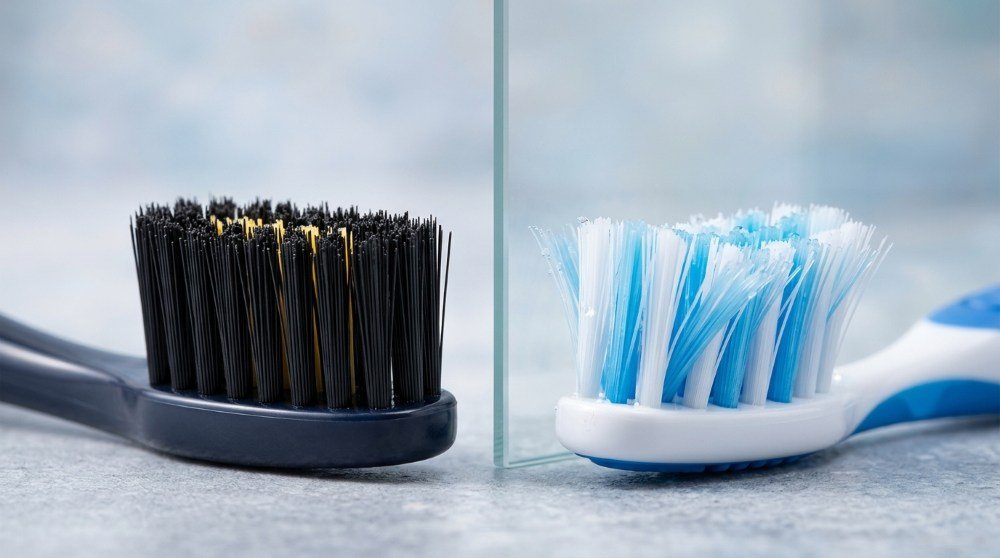
Soft, medium, and hard describe how stiff the bristle filaments are and how much they flex under pressure. Soft bristles bend easily against the tooth surface and gumline. Hard bristles resist bending, which means more of the brushing force gets transferred straight to your enamel and gum tissue instead of being absorbed by the bristle itself.
Bristle thickness plays a role too. Manufacturers use thinner nylon filaments for soft brushes and thicker ones for medium and hard brushes, though there’s no single industry standard that applies across every brand. That’s part of why one company’s “soft” can feel noticeably different from another’s.
How Bristle Firmness Is Actually Tested
Not all toothbrushes go through the same scrutiny. To earn the ADA Seal of Acceptance, a manual toothbrush has to meet ANSI and ADA safety standards for bristle testing, and firmer bristles that fall outside accepted limits may require additional clinical studies before they can carry the seal. In practice, that’s one reason soft-bristled brushes dominate store shelves: they’re the option most consistently proven safe for everyday, unsupervised use.
Why Soft Bristles Are the Standard Recommendation
When it comes to a hard bristle toothbrush vs soft, dental professionals land firmly on one side. The American Dental Association recommends using a soft-bristled toothbrush and applying gentle pressure, specifically because it minimizes the risk of gingival abrasion, irritation, and small injuries to the gum tissue caused by brushing.
The logic is straightforward. Plaque is soft and sticky. It doesn’t take a stiff, scrubbing bristle to remove it, just consistent contact and the right angle. Soft bristles flex into the space between the tooth and gumline, exactly where plaque tends to collect, without scraping against enamel or gum tissue the way firmer bristles can.
Bristle type isn’t a one-time decision, either. Whatever firmness you choose, dental associations recommend replacing the brush every three to four months, or sooner if the bristles look frayed or splayed, since worn bristles clean less effectively regardless of how soft or firm they started out.
Are Hard Toothbrushes Bad for Your Teeth and Gums?
This is the question most people are really asking, and the honest answer is: they can be, especially over time and with heavy pressure. Cleveland Clinic lists brushing too hard or too aggressively among the recognized causes of gum recession, alongside factors like plaque buildup, periodontal disease, and trauma to the gum tissue.
When gums recede, more of the tooth root becomes exposed. Root surfaces don’t have the same enamel protection as the crown of the tooth, so exposed areas can become more sensitive to hot, cold, and sweet foods, and are more prone to decay. None of this happens overnight. It’s usually the result of months or years of firm bristles combined with heavy pressure and back-and-forth scrubbing, rather than a single hard brushing session.
It’s also worth separating two things: bristle firmness and brushing pressure. A hard-bristled brush used gently is still riskier than a soft brush, but pressure and technique often do more damage than bristle type alone. That’s a distinction worth keeping in mind as you read the rest of this guide.

When Is a Firmer Brush Ever Used?
Firmer bristles aren’t entirely without a purpose; they’re just not meant for your natural teeth. Denture brushes, for example, sometimes use firmer bristles because dentures are more durable than living tooth enamel and gum tissue. Some cleaning brushes for retainers or removable appliances are also firmer for the same reason.
If you’re brushing anything still attached to your mouth (natural teeth, gums, or the tongue), soft remains the safer default. Firmer brushes designed for appliances shouldn’t be used on natural teeth or gums.
Soft vs Medium Toothbrush: Is There a Real Difference?
Medium bristles sit in a middle ground, and the research reflects that. Toothbrushes with medium bristles have been shown to be effective at removing biofilm, so it’s not that medium brushes fail to clean. The concern is the same one that applies to hard bristles, just to a lesser degree: medium bristles flex less than soft ones, which can translate to more pressure reaching the gumline and enamel over repeated use.
For most adults without a specific dental reason to choose otherwise, soft remains the recommended default over medium. If you’ve been using a medium brush without any sensitivity, bleeding, or visible gum changes, that’s not necessarily cause for alarm, but it’s a reasonable thing to mention at your next checkup.
How to Choose the Right Toothbrush for Your Teeth
- Check your gums first. Look for sensitivity, bleeding when you brush, or teeth that seem to be showing more of their root than they used to.
- Default to soft bristles. Unless a dentist has told you otherwise for a specific reason, soft is the safest starting point for daily brushing.
- Pick a head size that fits your mouth. A brush head that’s too large can make it hard to reach your back molars properly.
- Decide between manual and electric based on what you’ll actually use consistently. Both are effective when used correctly; the best toothbrush is the one you’ll use twice a day, every day.
- Mark your calendar to replace it every three to four months, or sooner if the bristles look worn, splayed, or discoloured.
Brushing Technique Matters as Much as Bristle Type
Even the softest brush won’t protect your gums if the technique behind it is too aggressive. Dental guidance consistently points to the same basic approach: angle the bristles at roughly 45 degrees toward the gumline, use short, gentle strokes rather than a hard back-and-forth scrub, and let the bristles do the work rather than your arm.
In our London office, we see this pattern often: patients who switch to a soft brush but keep the same heavy-handed technique still end up with irritated gums, because pressure and motion matter just as much as bristle firmness. Two minutes, twice a day, with light pressure and a soft brush covers most of what dental professionals recommend for daily home care.
FAQ: Your Toothbrush Questions Answered
Should I use a soft or hard toothbrush?
For most people, soft is the better choice. It cleans plaque effectively while lowering the risk of enamel wear and gum irritation compared to medium or hard bristles.
Are hard toothbrushes bad for your gums?
They can contribute to gum recession and enamel wear over time, particularly when combined with heavy brushing pressure. This is a gradual effect rather than something that happens after one use.
Is a soft or medium toothbrush better for sensitive teeth?
Soft is generally the better option for sensitive teeth and gums, since it flexes more and puts less pressure on exposed or irritated areas.
How often should I replace my toothbrush?
Every three to four months, regardless of whether you use a soft, medium, or hard brush, or sooner if the bristles look frayed.
Not Sure Which Toothbrush Fits Your Smile? Ask at Your Next Visit
Bristle firmness is one piece of a bigger picture that includes your gum health, your brushing habits, and any existing dental work. A quick look during a routine exam can catch early signs of enamel wear or gum recession long before they become noticeable on their own. The team at We Smile Dentistry can check for those signs and point you toward the brush and technique that actually fit your mouth. If it’s been a while since your last cleaning, book your appointment or reach out to our team to get that conversation started.