

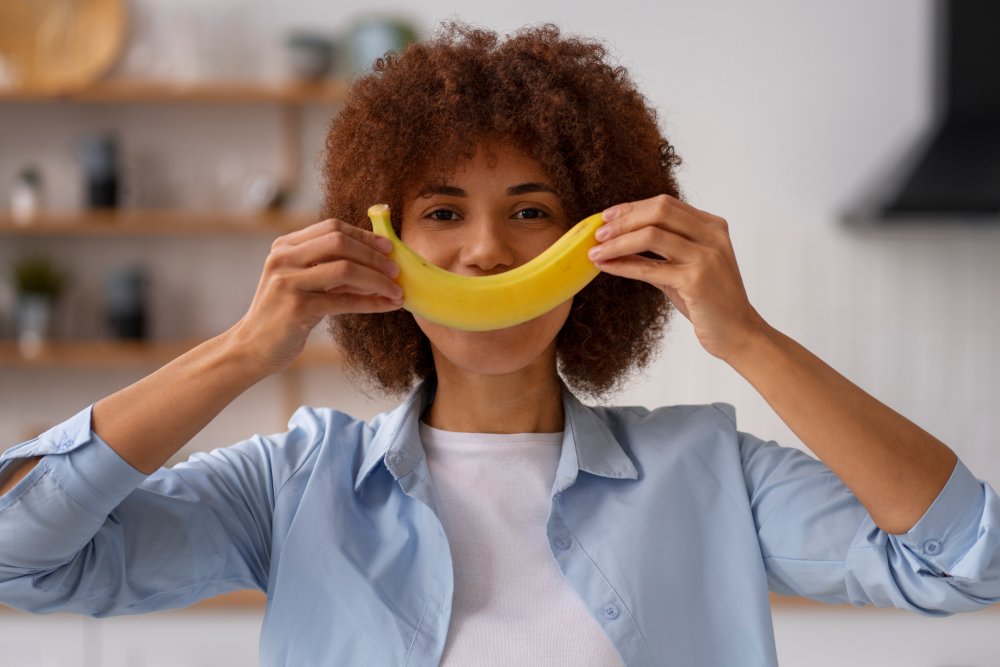
Banana Peel Teeth Whitening Trend: Does It Really Work?
Table of Contents
Where the Banana Peel Teeth Whitening Trend Came From
What Actually Causes Tooth Discolouration
Does Banana Peel Actually Whiten Teeth? What the Science Says
Is It Safe, and What About Other DIY Whitening Trends?
Whitening Methods That Are Actually Backed by Evidence
How to Care for Your Smile Safely at Home
When to See a Dentist About Discoloured Teeth
Ready for a Brighter Smile? Book a Whitening Consultation in London, Ontario
Key Takeaways
- There is no peer-reviewed evidence that banana peel teeth whitening produces lasting results.
- Tooth enamel does not absorb minerals from food rubbed on its surface, which is why the trend’s core claim falls apart.
- Apparent “results” usually come from improved brushing habits during the trial period, not the banana peel itself.
- Hydrogen peroxide and carbamide peroxide are the only ingredients clinically proven to whiten teeth effectively.
- Sudden or uneven darkening of a single tooth should be evaluated by a dentist, since it may signal decay or trauma rather than a cosmetic issue.
The banana peel teeth whitening trend has racked up millions of views across TikTok and Instagram, and patients in our London, Ontario office have started asking whether it actually works. The pitch is simple: rub the inside of a banana peel on your teeth for a couple of minutes each day, brush as usual, and watch your smile brighten within a few weeks.
This post walks through what the science actually says, why the trend resonates, and what evidence-based whitening looks like for anyone serious about a brighter smile that lasts.
Where the Banana Peel Teeth Whitening Trend Came From
The trend gained traction on TikTok and Pinterest as a “natural” alternative to professional whitening.
Creators claim that banana peels contain potassium, magnesium, and manganese that absorb into tooth enamel and brighten teeth over time, all without the use of bleaching agents.
It resonates for understandable reasons. Bananas are inexpensive, readily available, and feel safer than at-home peroxide kits. Patients often tell us they like the idea of skipping anything that sounds “chemical.” When a remedy promises results for the cost of a piece of fruit, the appeal is obvious.
The real question is not whether the trend is popular, but whether it does anything.
What Actually Causes Tooth Discolouration
Tooth discolouration falls into two main categories, and the difference matters.
Extrinsic stains sit on the surface of the enamel. They come from coffee, black tea, red wine, dark berries, curry-based foods, and tobacco. These respond reasonably well to brushing, professional cleanings, and surface-level whitening products.
Intrinsic stains live within the tooth itself. Causes include aging, certain antibiotics taken in childhood (such as tetracycline), trauma to a tooth, dental fluorosis, and changes after a root canal. These do not respond to surface treatments because the discolouration is not on the surface.
Tooth enamel is the hardest substance in the human body. While it is mineralized, it does not absorb nutrients from food rubbed against it. Enamel’s dense, crystalline structure is what allows it to resist most everyday wear in the first place. That single fact does most of the heavy lifting in answering the banana peel question.
Does Banana Peel Actually Whiten Teeth? What the Science Says
▶ Short answer:
There is no peer-reviewed evidence that rubbing a banana peel on your teeth produces meaningful or lasting whitening.
The “mineral absorption” claim does not hold up under scrutiny. Potassium, magnesium, and manganese cannot diffuse into the crystalline structure of enamel through brief topical contact. That is not how remineralization works.
Real remineralization involves calcium and phosphate ions interacting with enamel in the presence of saliva, usually supported by fluoride.
So why do people post enthusiastic before-and-after videos? A few likely reasons:
- The peel’s soft texture may polish away small amounts of surface plaque or debris, giving teeth a slightly cleaner look.
- People often improve their brushing habits during a “two-week trial,” and the credit goes to the banana peel.
- Lighting, camera angles, and white-balance shifts in social media videos can dramatize differences that aren’t really there.
- Placebo and confirmation bias are powerful, especially when you’ve told friends you’re trying something.
Professional whitening, by comparison, relies on hydrogen peroxide or carbamide peroxide. These compounds break down stain molecules through oxidation, a measurable chemical reaction that has been studied extensively.
The American Dental Association supports peroxide-based bleaching as both effective and safe when used appropriately. Individuals who try the banana peel approach often report their teeth “feel cleaner.” Most of the time, that’s the new attention to brushing talking, not the fruit.
Is It Safe, and What About Other DIY Whitening Trends?
The banana peel itself is unlikely to damage enamel. The larger risk is false confidence: spending weeks on a method that does not work while a real cause of discolouration goes unaddressed.
Sudden colour changes, a single dark tooth, or banded staining can point to issues like trauma, decay, or developmental conditions that need a clinical eye.
Several other DIY whitening trends carry real risks:
- Lemon juice or apple cider vinegar are highly acidic and erode enamel permanently. Once enamel is gone, it does not grow back.
- Baking soda used aggressively is abrasive and wears down enamel over time.
- Activated charcoal is abrasive, has no proven whitening benefit, and can stain bonded restorations.
- High-concentration hydrogen peroxide swished at home can irritate gums and soft tissue.
The trend that costs nothing and looks safe can quietly cost you enamel, and that is a one-way trip.
Whitening Methods That Are Actually Backed by Evidence
Several whitening options have a real track record. Each comes with trade-offs, and individual results vary.
- In-office professional whitening uses higher-concentration peroxide gels under a dentist’s supervision. It usually produces the fastest visible change.
- Custom take-home trays from a dental office contain a lower-concentration gel in trays moulded to your teeth. Most patients use them over a couple of weeks.
- Over-the-counter whitening strips can lift mild surface stains, although fit and concentration vary widely by brand.
- Whitening toothpastes address surface stains only. They do not change the underlying tooth shade.
Not everyone is a candidate. Patients with significant gum recession, untreated decay, or extensive bonding and crowns on front teeth often need a different plan, since whitening agents only affect natural tooth structure.
A consultation with your local dental clinic, like We Smile Dentistry, can sort out which path makes sense.
How to Care for Your Smile Safely at Home
If your goal is a brighter, healthier-looking smile without risking your enamel, these steps are the foundation:
- Brush twice a day with a fluoride toothpaste using a soft-bristled brush. Two minutes each time, gentle pressure.
- Floss daily to clear plaque between teeth, where stains and decay quietly start.
- Limit deeply staining drinks like coffee, black tea, and red wine, or rinse with water afterward.
- Cut tobacco use, which is one of the most aggressive sources of staining and a serious risk to overall oral health.
- Choose whitening products with a recognized seal if you want a low-risk surface-stain option.
- Talk to a dentist before trying stronger whitening, especially if you have sensitivity, gum recession, or existing dental work.
- Keep regular cleaning appointments. A professional cleaning lifts set-in stains that brushing alone cannot reach.
These habits do more for the brightness of your smile than any viral hack ever will.
When to See a Dentist About Discoloured Teeth
Some discolouration is a cosmetic question. Some are clinical ones. It is worth booking a visit if you notice:
- A single tooth that has darkened (possible trauma, dying nerve, or decay)
- Brown or grey banding across multiple teeth (sometimes intrinsic)
- White spots that have always been there (often developmental, may need a different cosmetic approach)
- Sensitivity that worsens when you try whitening products
- Discolouration alongside bleeding gums, pain, or persistent bad breath
A short conversation with a dentist often replaces months of guesswork at home, and rules out anything that needs early treatment.

Frequently Asked Questions
Does banana peel actually whiten teeth?
No. There is no peer-reviewed evidence that rubbing banana peel on your teeth whitens them. Any apparent improvement is usually from light polishing or better brushing habits during the trial.
Is banana peel teeth whitening safe?
The peel itself is generally low-risk for enamel. The bigger concern is delaying real care, since some types of discolouration signal an underlying issue that needs clinical attention.
How long does it take for banana peel to whiten teeth?
It does not. Reports of “results in two weeks” are not supported by peer-reviewed research. Any visible difference is typically from improved oral hygiene during that period.
How can I whiten yellow teeth naturally?
Brushing, flossing, regular cleanings, cutting tobacco, and limiting staining drinks can reduce surface yellowing. The underlying tooth shade does not change without whitening agents.
How long does professional teeth whitening last?
Results vary by diet and habits, but professional whitening typically lasts from several months to a couple of years before a touch-up is needed.
Ready for a Brighter Smile? Book a Whitening Consultation in London, Ontario
If you have been weighing the banana peel trend against professional options, the simplest next step is a quick conversation with a dentist who can tell you what is actually going on. At We Smile Dentistry, our team can identify whether your discolouration is a candidate for whitening, recommend the right approach for your enamel and gum health, and walk you through what to expect at every step.
The information on this blog is provided for educational and informational purposes only and is not intended to diagnose, treat, or prevent any health condition. Always seek the advice of your dentist or another qualified health provider with any questions you may have regarding a medical condition. Never disregard professional medical advice or delay seeking it because of something you have read on this site. For personalized care, please book a consultation with We Smile Dentistry.
SOURCE:
- Cleveland Clinic. Tooth Discoloration. https://my.clevelandclinic.org/health/symptoms/10958-tooth-discoloration
- American Dental Association. Tooth Whitening / Bleaching. https://www.ada.org/resources/ada-library/oral-health-topics/tooth-whitening
- Canadian Dental Association. Tooth Whitening. https://www.cda-adc.ca/en/oral_health/procedures/tooth_whitening/