

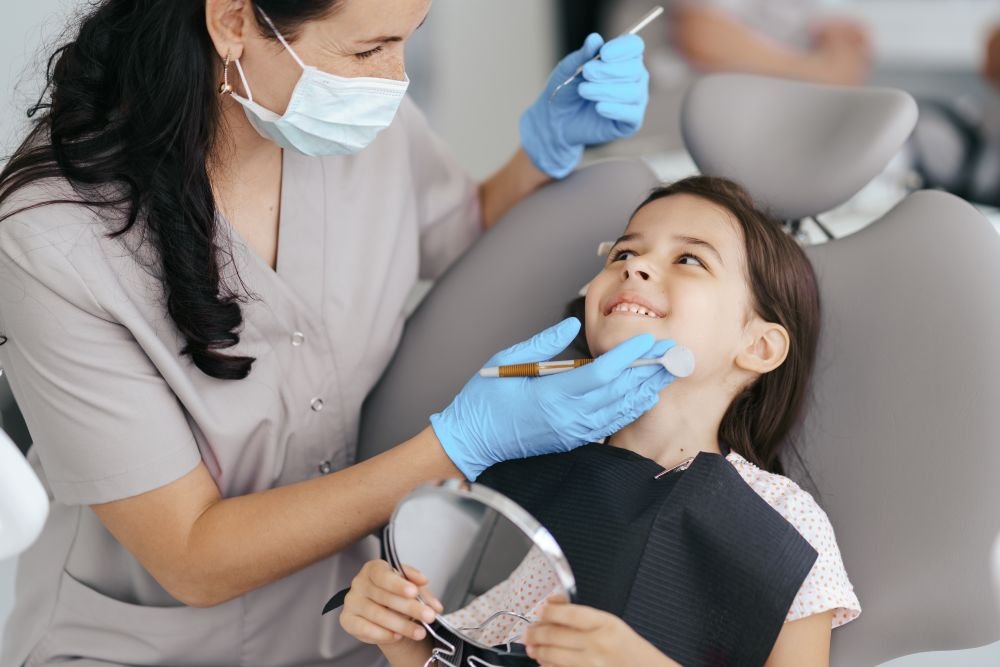
When Should Your Child First Visit the Dentist? Age Guide for Parents
Table of Contents
That first tiny tooth is a big moment. It shows up in photos, gets announced in the family group chat, and usually arrives with a new question: when should a child first go to the dentist? Many parents assume the answer is “when they have a full set of teeth” or “once they start school.” In most cases, it is much earlier than that.
Parents in our London, Ontario office ask about this all the time, often while holding a baby who has just discovered how fun it is to chew on everything. Below, we cover the recommended first dental visit age, what actually happens at that appointment, how to prepare your little one, and practical toddler dentist tips for keeping small teeth healthy between visits.
Key Takeaways
- The Canadian Dental Association recommends a first dental visit within six months of the first tooth appearing, or by age one.
- The first visit is usually short and gentle. It focuses on a quick look, a conversation with parents, and prevention.
- Baby teeth matter. They help children eat, speak, and hold space for adult teeth.
- Calm, simple preparation at home can make a big difference in how a toddler feels about the dentist.
- If your child is already past their first birthday, it is not too late. Book the first visit whenever you can.
When Should a Child First Go to the Dentist?
The Canadian Dental Association recommends that a child’s first dental visit happen within six months of the first tooth coming in, or by one year of age. Regular visits should continue after that.
The first tooth often appears somewhere around six months, although the timing varies a lot. Some babies have a tooth before four months, while others are toothless past their first birthday. Both can be normal. If your child has no teeth by their first birthday, the age-one visit is still a good idea, since the dentist can check the gums and talk you through what to expect.
Why So Early?
It can seem strange to book a dental appointment for a baby with two teeth. The early visit is less about treatment and more about prevention. It gives the dentist a chance to:
- Check how the teeth, gums, and jaw are developing
- Assess your child’s risk of cavities, based on things like feeding habits and family history
- Show you how to clean your baby’s teeth properly
- Set a visit schedule that fits your child’s needs
Early visits also help children get familiar with the dental office while the stakes are low. A toddler whose first experience is a friendly look and a sticker usually has an easier time than a child whose first visit happens because something already hurts.
Why Baby Teeth Matter More Than You Might Think
It is tempting to think baby teeth do not matter much, since they eventually fall out. In reality, baby teeth (also called primary teeth) do important jobs for years:
- Eating. Healthy teeth help children chew a wide range of foods comfortably.
- Speaking. Teeth help children form sounds as they learn to talk.
- Holding space. Each baby tooth saves a spot for the adult tooth underneath. When a baby tooth is lost too early, nearby teeth can drift into the gap and crowd the adult tooth later.
Tooth decay in young children is also more common than many parents expect. Early childhood caries (cavities in children under six) can develop quickly in baby teeth because their enamel is thinner than adult enamel. The Canadian Dental Association has reported that early childhood caries is a leading cause of day surgery for Canadian children aged one to five. The encouraging part is that much of this decay is preventable with early guidance and good daily habits.
What Happens at a Child’s First Dental Visit
Knowing what to expect can calm your nerves, and a calm parent helps a little one feel calm too. Every child is different, so the visit is shaped around your child’s comfort that day.
A Warm Welcome
The first few minutes are about getting comfortable. Your child can look around, meet the team, and settle in. For babies and young toddlers, the exam is often done with the child sitting on a parent’s lap, so they can see a familiar face the whole time.
A Gentle Look
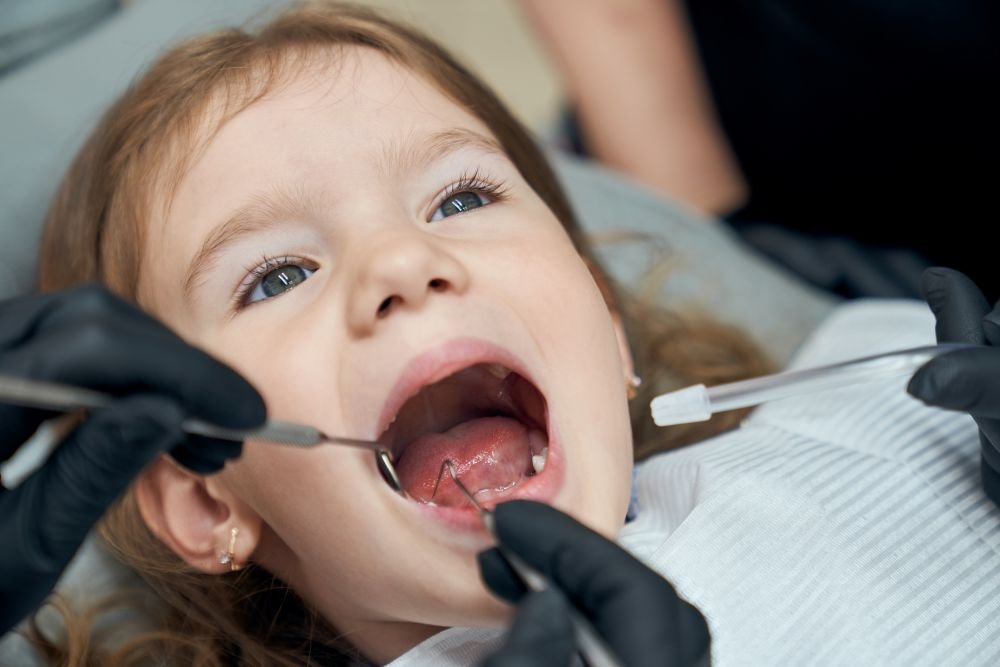
The dentist counts the teeth, checks the gums, and looks at how the jaw and bite are developing. The dentist also looks for early signs of decay, such as chalky white spots near the gumline. This part is quick. Most babies spend it either curious, chewing on a finger, or protesting loudly, and all three are completely normal.
Where it helps, we may use an intraoral camera (a small, pen-sized camera) to show you a close-up of your child’s teeth on a screen. Older toddlers often enjoy seeing their own teeth “on TV.”
Cleaning and Fluoride, If Recommended
Depending on your child’s age and comfort, the visit may include a gentle cleaning and a fluoride treatment. A child’s cleaning is a simple, prevention-focused version of a routine adult cleaning, without the scraping many adults picture. If you are curious about what a routine cleaning involves at any age, our article on deep cleaning vs regular cleaning explains the difference. Fluoride recommendations are based on your child’s age, diet, and cavity risk.
X-rays are usually not part of a baby’s first visit. When they are needed later, we use low-dose digital radiography.
Time for Your Questions
A big part of the first visit is a conversation with you. Patients often ask us about:
- Teething discomfort
- Bottles, breastfeeding, and sippy cups
- Thumb sucking and pacifiers
- How much toothpaste to use
- Snacks and drinks that are easier on teeth
There are no silly questions here. Parents of a first baby and parents of a fourth baby ask many of the same things.
Dental Visit Milestones by Age
Every child develops at their own pace, so think of this as a general guide rather than a strict schedule.
Age | What to Expect | Dental Focus |
First tooth to age 1 | First teeth appear | First dental visit; cleaning baby’s gums and teeth |
Ages 1 to 3 | Most baby teeth come in | Regular checkups; brushing with an adult’s help; bottle and snack habits |
Ages 3 to 6 | Full set of baby teeth | Pea-sized toothpaste; learning to spit; building routines |
Around age 6 | First adult molars arrive behind the baby teeth | Sealants may be discussed; first baby teeth start to loosen |
Ages 6 to 12 | Baby teeth fall out as adult teeth come in | Monitoring the bite and spacing; flossing habits |
Teens | Most adult teeth are in | Gum health, alignment, and wisdom teeth monitoring |
Looking Ahead to the Teen Years
Wisdom teeth are usually the last adult teeth to develop, and they are typically monitored from the mid-teens onward. Our guide to the signs your wisdom teeth need to be removed explains what dentists look for. If a teen ever does need a tooth removed, careful aftercare makes recovery smoother, and our article on how to avoid dry socket after an extraction is worth a read before the day arrives.
Toddler Dentist Tips: Preparing Your Child
You do not need a big pep talk. In fact, too much build-up can make a toddler more suspicious. These simple steps tend to work well.
Keep the Language Simple and Positive
Talk about the visit in a calm, matter-of-fact way: “The dentist is going to count your teeth and see how strong they are.” Try not to use words like “hurt,” “needle,” or “drill,” and avoid promising “it won’t hurt,” which can plant the idea that it might.
Play Dentist at Home
Take turns being the dentist with a stuffed animal or a doll. Count teeth, open wide, and say “ahh.” Picture books about visiting the dentist can help too.
Pick a Good Time of Day
Book the appointment when your child is usually rested and fed. For many toddlers, that is the morning or right after a nap. A tired, hungry toddler is a tough audience for anyone.
Bring Something Familiar
A favourite blanket or stuffed toy can help your child feel secure in a new place.
Stay Calm Yourself
Children pick up on their parents’ feelings quickly. If dental visits make you anxious, that is very common, and you are not alone. Try to keep your tone relaxed, and let the team take the lead.
Make It Routine
Regular visits help the dental office feel familiar. Over time, many children start to look forward to choosing a sticker and showing off their brushing.
Caring for Little Teeth Between Visits
What happens at home every day matters just as much as what happens in the dental chair.
Before the First Tooth
Wipe your baby’s gums gently with a clean, damp cloth after feedings. This removes milk residue and gets your baby used to having their mouth cleaned.
Once Teeth Arrive
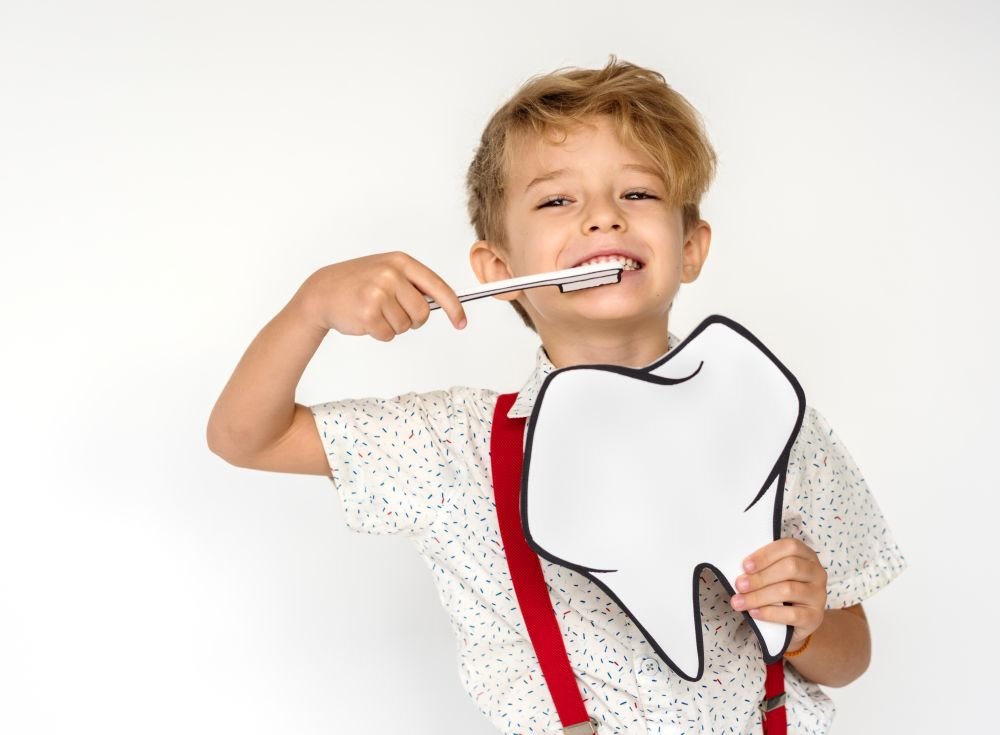
Brush twice a day with a soft, child-sized toothbrush. The Canadian Dental Association’s fluoride guidance recommends:
- Under age 3: Ask a health professional about your child’s cavity risk. If your child is at risk, an adult brushes with a rice-grain-sized smear of fluoride toothpaste. If not, use a toothbrush moistened with water.
- Ages 3 to 6: Use a pea-sized amount of fluoride toothpaste, with an adult helping.
- At any age: Encourage your child to spit out the toothpaste rather than swallow it.
Most young children need an adult’s help with brushing for several years. A common rule of thumb is that kids can brush on their own once they can tie their shoelaces, though you may still want to check their work.
Brush Gently
Small mouths do best with soft bristles and light pressure. Scrubbing hard can irritate the gums, and over many years, heavy brushing habits can contribute to receding gums. It is a habit worth getting right early.
Start Flossing When Teeth Touch
Once two teeth sit side by side, food can get trapped between them where a brush cannot reach. That is the time to start flossing for your child. A little pink when you first start is common and usually means the gums need more attention, not less. Our guide on why gums bleed when you floss explains when that is normal and when it is worth a closer look.
Watch Bottles and Snacks
Many dental organizations recommend not putting a baby to bed with a bottle of milk, formula, or juice, since liquids can pool around the teeth overnight. Water is the safest choice between meals. Frequent sipping and snacking on sugary foods keeps teeth under attack for longer, so it helps to save treats for mealtimes.
When to Book a Visit Sooner
Do not wait for the next routine checkup if you notice:
- White, chalky, or brown spots on the teeth
- A chipped or cracked tooth after a fall
- Gum swelling, a bump on the gums, or bleeding that does not settle
- Your child refusing to chew, or touching one area of the mouth often
- Ongoing pain or sensitivity
If a baby tooth is knocked out, call your dental office right away. Unlike adult teeth, baby teeth are usually not put back in the socket, because doing so can harm the adult tooth developing underneath.
Seek emergency medical care right away, by calling 911 or going to the nearest emergency department, if your child has facial swelling that is spreading, trouble breathing or swallowing, a fever with swelling, or bleeding that will not stop.
What If My Child Is Already Older Than One?
You have not missed your chance. Plenty of children have their first dental visit at two, three, or older. Book the first visit when you can, and start the at-home habits above today. There is no judgment here, only a fresh start.
Coverage and Costs
Many families have dental benefits through work, and some children may be eligible for the Canadian Dental Care Plan. Coverage depends on your plan, eligibility, the services needed, and any pre-approval requirements. Our team can review your benefits and explain any expected costs before treatment begins.
Frequently Asked Questions
When should a child first go to the dentist?
The Canadian Dental Association recommends a first dental visit within six months of the first tooth coming in, or by one year of age. Regular checkups should follow, at a schedule your dentist recommends based on your child’s needs.
What is the right first dental visit age if my baby has no teeth yet?
If your baby has no teeth by their first birthday, an age-one visit is still a good idea. The dentist can check the gums and jaw, assess cavity risk, and show you how to care for teeth once they arrive.
What happens at a toddler's first dental visit?
The first visit is usually short and gentle. It typically includes a warm introduction, a quick look at the teeth, gums, and bite, a conversation about home care and feeding, and, when appropriate, a gentle cleaning and fluoride treatment.
What are some toddler dentist tips for a nervous child?
Use simple, positive words, play “dentist” at home, book the visit for a time when your child is rested and fed, bring a comfort item, and try to stay calm yourself. Regular visits also help the office feel familiar over time.
How much toothpaste should my toddler use?
For children under three, the Canadian Dental Association recommends asking a health professional about cavity risk. At-risk children use a rice-grain-sized smear of fluoride toothpaste; others can brush with water. From ages three to six, a pea-sized amount is recommended, with an adult helping.
Give Your Child a Healthy Start
Your child’s first dental visit is a small appointment with a long-lasting payoff. It sets up good habits, catches small problems early, and helps your child see the dentist as a friendly, familiar place.
At We Smile Dentistry, we see babies, toddlers, school-aged kids, teens, parents, and grandparents, often in the same week.
Our approach is gentle, patient, and judgment-free, whether this is your child’s very first visit or their first in a while. When that first tooth makes its debut, or if your little one is already past their first birthday, reach out to our London, Ontario team to book your appointment.
This content is for informational purposes only and is not a substitute for professional dental advice, diagnosis, or treatment. For personalized care, please book a consultation with Dr. Spagnuolo at We Smile Dentistry by calling us or visiting wesmiledentistry.ca/contact.